I was told that the Kalumburu community doesn't really like visitors and given we arrived on a Sunday and it was very quiet. I was a little uneasy, but I thought I pull into the local gallery and find out myself.
Getting to Kalumburu: via the Kalumburu Road, unsealed, roughly 270km north of the Gibb River Road.
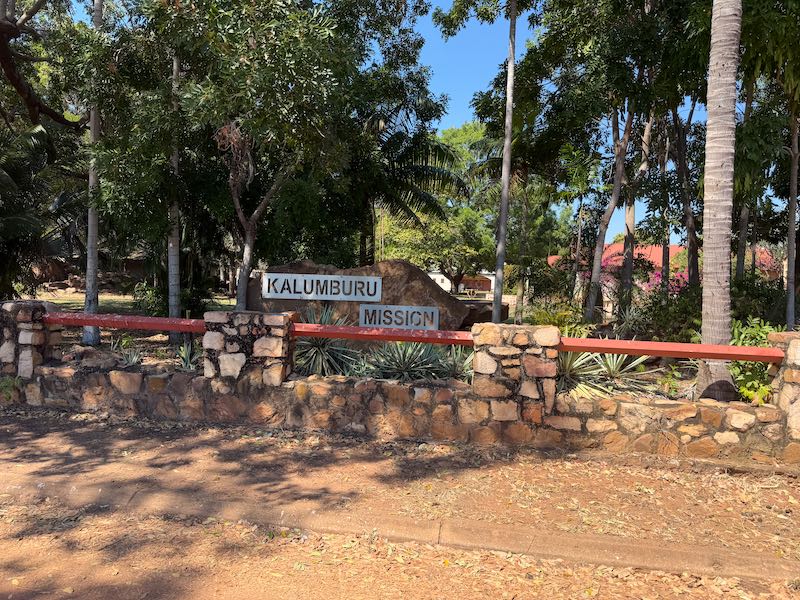
The community
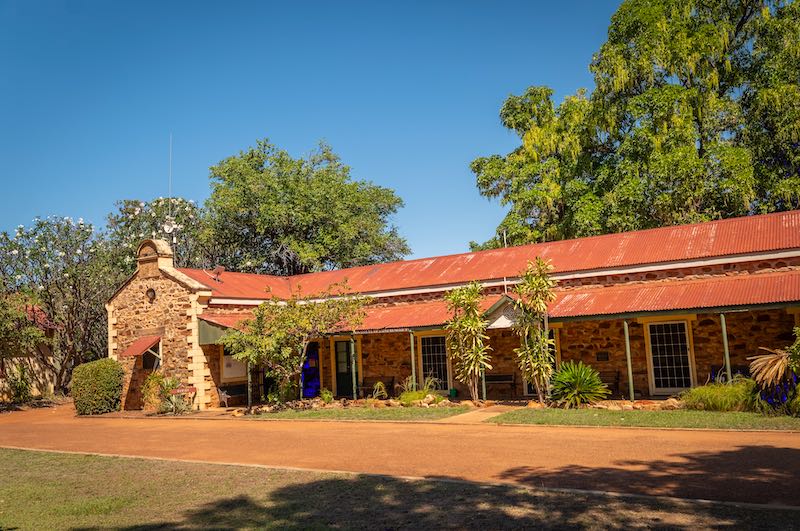
Kalumburu started life as a Benedictine mission. The Order of Saint Benedict set up at Pago on Napier Broome Bay in 1908, then moved the mission to its current site on the King Edward River in 1937 once water supply became an issue at the old spot. Under the monks and nuns, the mission grew into a genuinely self-sufficient operation, running cattle, growing tropical fruit and vegetables, and at one stage importing nothing but fuel for the vehicles and the generator. The community was officially renamed Kalumburu in 1951, after being known as Drysdale River Mission for the first few decades.
The mission has a couple of stories that go well beyond the Kimberley. In 1942, two German aviators went down in the area after losing their bearings, and the mission took them in. The gesture apparently reached Berlin, because an organ said to have been sent by Adolf Hitler in recognition of the rescue is still held at the Benedictine monastery at New Norcia. The same year, the mission helped survivors from the Koolama, a ship bombed by Japanese aircraft that limped into Wyndham before sinking at the wharf.
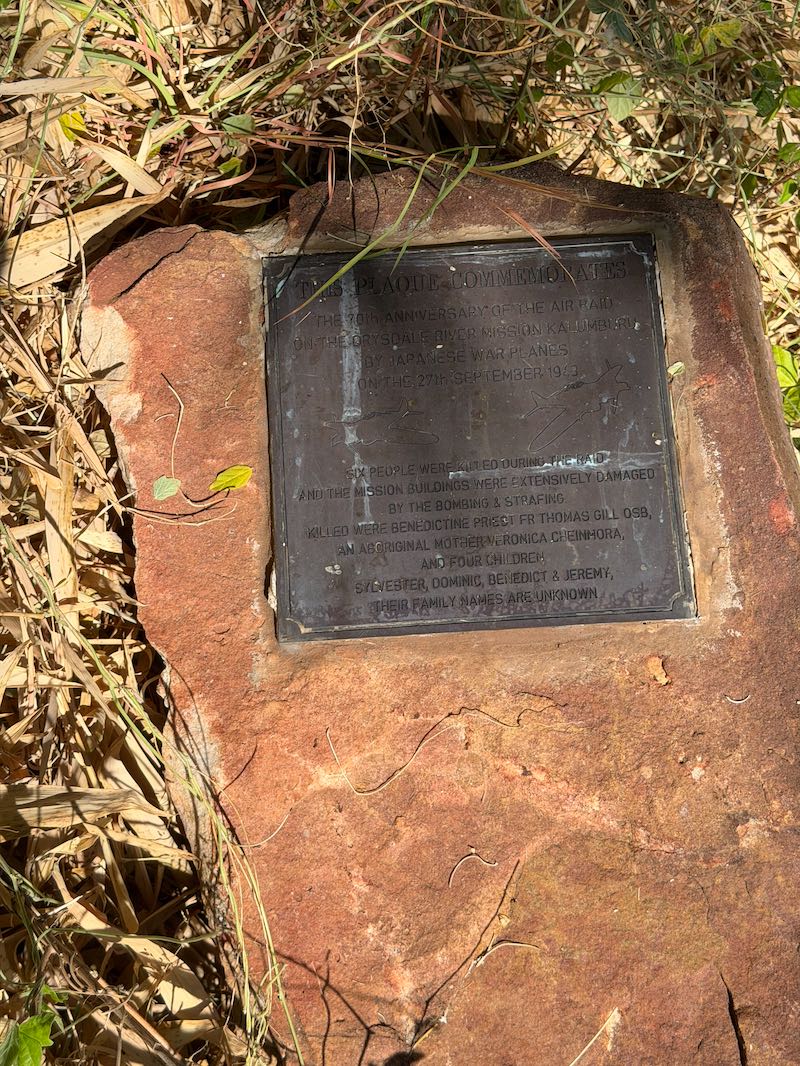
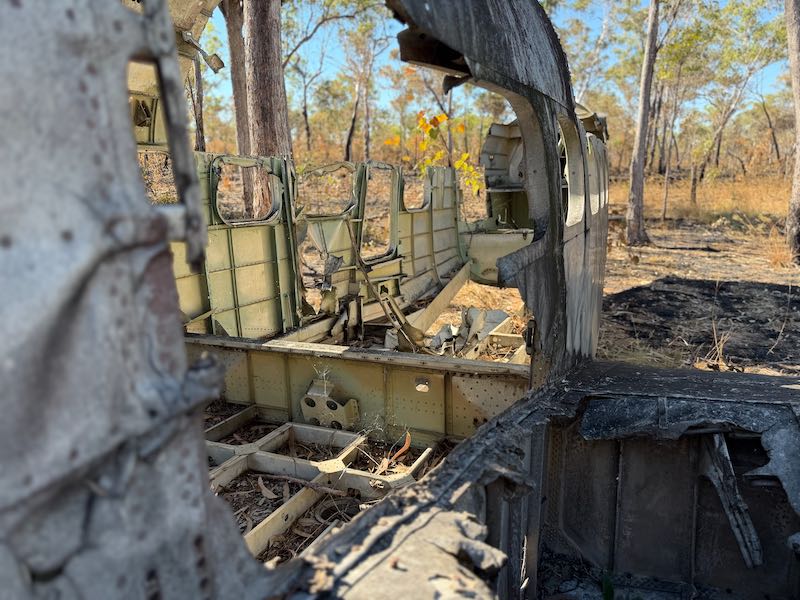
Then came the war proper. With Japan occupying the Dutch East Indies in 1942, the mission's airstrip became a RAAF staging post for operations against Japanese forces in Timor. By April 1944 it was seeing hundreds of aircraft movements a month, with roughly 250 operational hours flown and around 60,000 pounds of bombs dropped on enemy territory from this one strip. That significance is also what made it a target. On 27 September 1943, Japanese bombers hit the airfield and mission, killing six people sheltering in a trench: Benedictine priest Father Thomas Gil, and Veronica Cheinmora with her four children. The mission church, completed in 1936, was seriously damaged in the raid and rebuilt afterward by Father Rosendo and Aboriginal workers from the community. It still stands today. After the bombing, the airfield itself was shifted 32km north-west to the Anjo Peninsula, and once Truscott Airfield went up nearby in 1944, Kalumburu's military role wound down.
If you're interested in the wrecks scattered around the bush near Kalumburu, that whole chapter of history is why they're there. The Father Thomas Gil Museum, on the mission grounds in the old school house, holds an extensive collection of local and wartime history and artefacts, and it's worth a visit alongside the plane wrecks themselves.
The old church and especially the old bakery is very interesting to see. The sandstone buildings are very nice and it reminded me a little bit of the Hermannsburg mission close to Alice Springs.
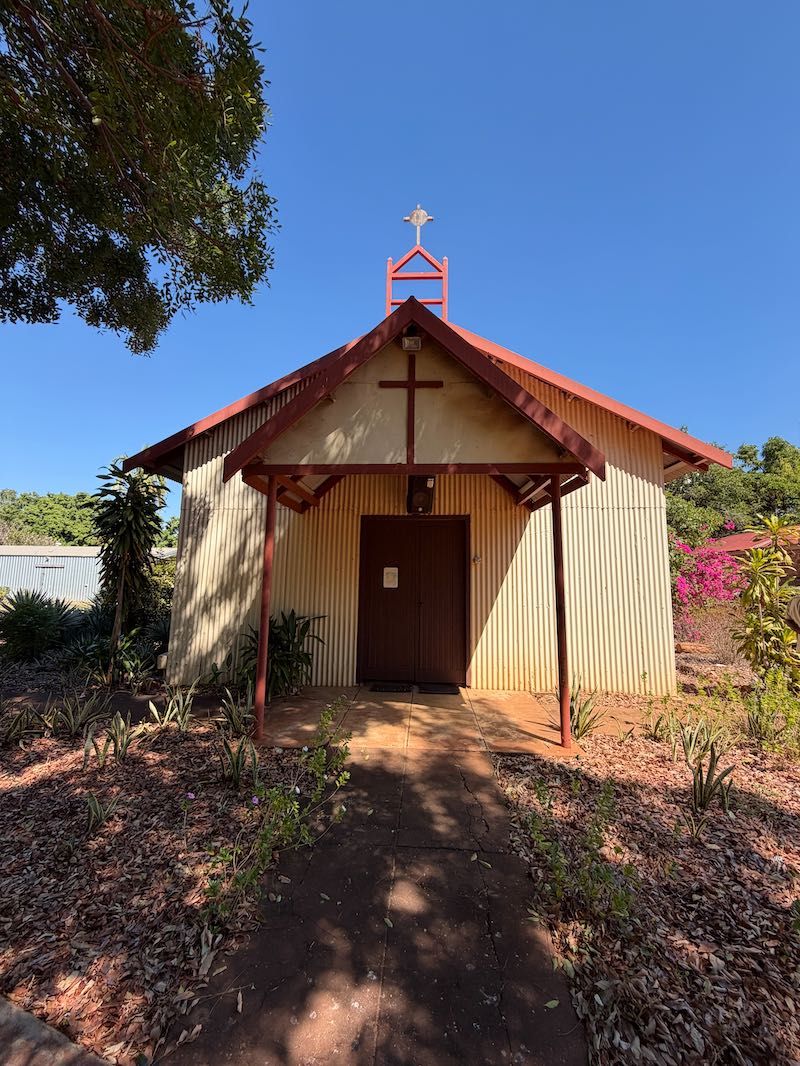
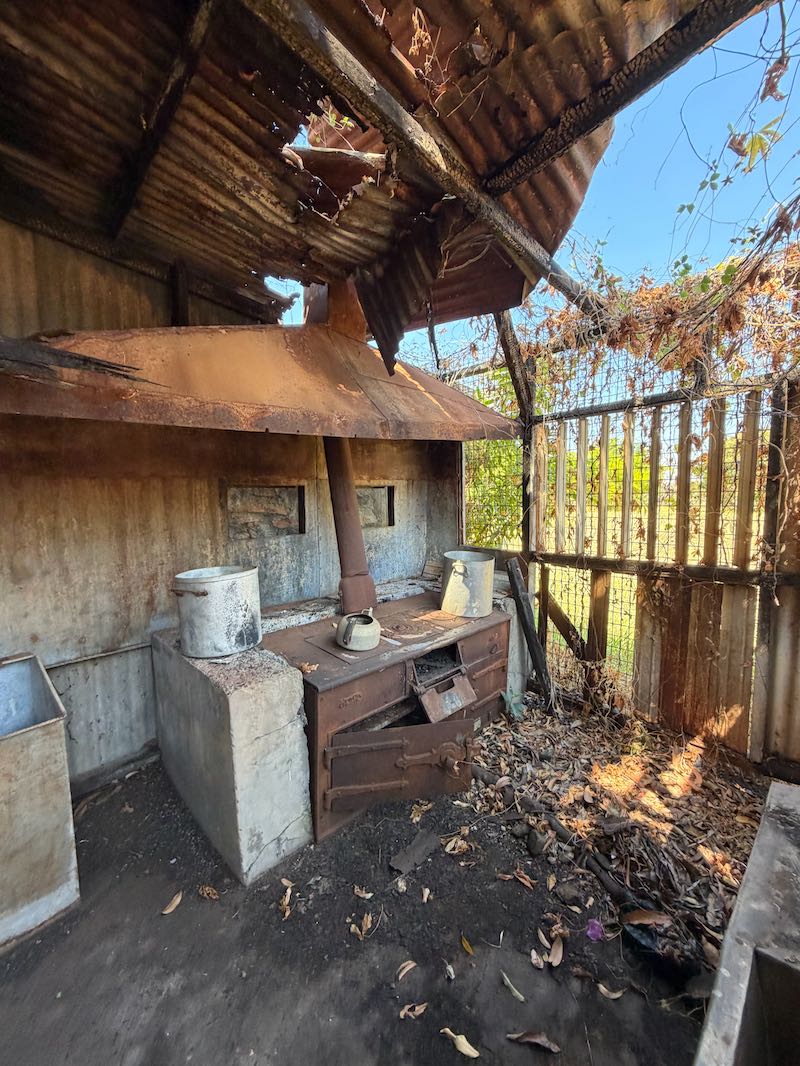
Today Kalumburu is home to around 400 to 500 people, mostly from the Wunambal and Kwini language groups.
The gallery
The local art gallery is run by Kira Kiro Artists, established in 2009 with the Kwini and Wunambal community. Some of the artists are quite accomplished and when I was there they just prepared to go on a art exhibition in one of the major cities. Likely Perth, All That Country Holds at PICA, April to June 2026. Angelina Karadada Boona was in that one.
Betty Bundamurra has been at the centre since it opened and went through the Art Gallery of Western Australia's Desert River Sea program. Angelina Karadada Boona is a senior artist there as well, NATSIAA finalist in 2025, with work in the National Museum of Australia, the Art Gallery of Western Australia and the Art Gallery of South Australia. Her parents Lily and Jack Karadada painted Wandjina. Clarrie Djanghara paints at Kira Kiro too. Mary Punchi Clement was one of the senior artists the centre was built around. Work is sold through Waringarri Aboriginal Arts in Kununurra.
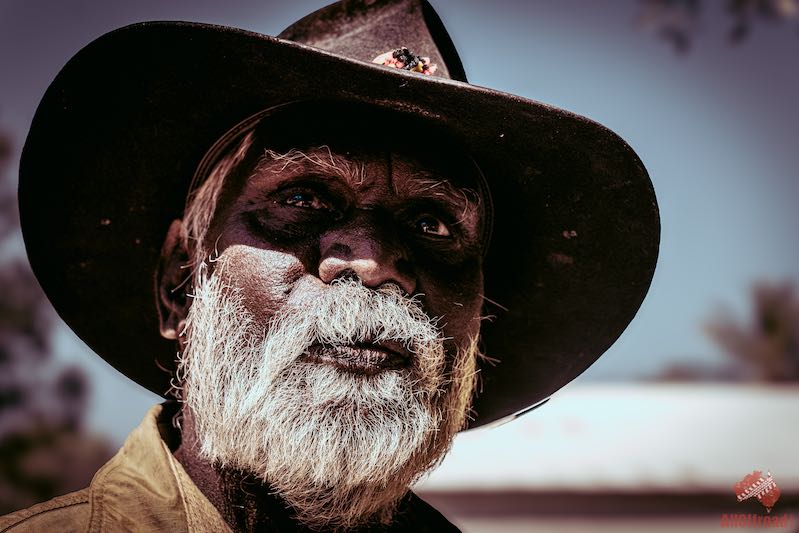
Clarrie
That's where I met Clarrie, who runs Clarrie's Cultural Tours out of Kalumburu. He'll usually be found sitting out the front of the Kalumburu store, or someone in the store will know where to find him.
I paid the standard $10 donation to visit Kalumburu Mission, which goes toward keeping the mission running, and paid Clarrie a bit extra on top for his time walking me through it. Hearing the mission's history from his side of it, rather than off a plaque, was worth doing.
Clarrie offers trips to Turtle Rock, which cost eighty dollars per person. Unfortunately he doesn't have his own transport so you need to have a spare seat to get him there. Unfortunately, I was told that the Turtle Rock sites are not that good beforehand. And to be honest, I tried to find it myself, but it's a big area and I didn't.
Things you should know
Definitely drive very slow through the town as kids play on the street and there's also quite a few camp dogs and the owners don't take it lightly if you run one of them over.
You'll need a Visitors Permit from the Community Resource Centre or the Uraro Store when you arrive, and an Entry Permit for the Aboriginal Reserve area, which is free but worth applying for before you leave home.
When I was there, the store was well stocked, the staff was very friendly and as you can expect some of the prices are quite high but other things are actually fairly reasonable. I know that at present it is not well stocked at all as it hasn't had a delivery for two weeks and won't get a delivery for another week. Never rely on that store and keep in mind that it needs to supply the indigenous community and is not really geared for travellers. I also filled up fuel at the mission, which in comparison to the outside world was also not that badly priced. Kalumburu has fuel through the mission. It needs to be prepaid in the store. I wouldn't rely on it if better call two days before and make sure that they have fuel at hand.
The mission actually also has a small caravan park camping area with facilities where you can stay overnight.
Getting to Kalumburu: via the Kalumburu Road, unsealed, roughly 270km north of the Gibb River Road.
A video series from this trip is coming on the AllOffRoad YouTube channel. For remote travel more generally, the Simpson Desert Travel Guide is the book I keep pointing people to — 260 pages, PDF and EPUB.